






You've signed the lease. Construction is moving. Furniture is coming. Employees have a move-in date. Your network equipment is ready. And then someone asks: "When will the fiber be installed?"
That's when an otherwise well-planned commercial project can suddenly become complicated. There is no universal timeline for business fiber construction in San Antonio. Some installations are relatively simple. Others require engineering, permits, underground construction, utility coordination, easements or significant network extensions. And when the building's opening date depends on connectivity, the difference matters.
The important question isn't simply "How long does fiber take?" It's "What is required to get connectivity from the existing network into this specific building?"
Why There Is No Standard Fiber Installation Timeline
Fiber installation is not one single process. Consider two buildings.
Building A
Carrier fiber already enters the building. The telecommunications room is ready. Capacity is available. Only relatively minor provisioning and installation work is required.
Building B
The nearest practical fiber access point is some distance away. Reaching the property requires underground construction, permitting, boring beneath a roadway and coordination with multiple parties.
Both customers may have ordered "business fiber." But they are dealing with completely different projects. That's why generic promises about fiber installation timelines can be misleading.
Business Fiber Installation — Typical Stages
Business fiber installation can involve multiple stages depending on the location and construction requirements.
Step 1: Carrier Availability
The first question is whether a carrier already has usable infrastructure at or near the location. A website may say "Fiber available." But that can mean different things. It may mean fiber is already inside the building, fiber exists at the property, fiber exists nearby, or the carrier can potentially construct fiber to the location. Those are not the same thing. Before relying on an installation date, businesses should understand what physical infrastructure actually exists.
Step 2: Site Survey
If additional work is required, the carrier or contractor may need to evaluate the property. That can involve determining:
- Where existing telecom infrastructure is located
- Where fiber should enter the property
- Where the telecom room is located
- Whether conduit exists
- Whether conduit is usable
- Whether new conduit is required
- Whether building penetrations are required
- How cable will reach network equipment
- Whether outside construction is necessary
The complexity of the site can significantly affect the project.
Step 3: Engineering
When fiber has to be extended, the project may require an engineered route. That route may need to account for:
- Existing utilities
- Roads
- Sidewalks
- Parking areas
- Drainage
- Property boundaries
- Easements
- Rights-of-way
- Railroad crossings
- Utility poles
- Existing conduit
- Building entrances
The shortest route on a map isn't always the route that can actually be constructed.
Step 4: Permits and Rights-of-Way
Some fiber construction occurs entirely on private property. Other projects involve public rights-of-way or infrastructure controlled by third parties. Depending on the route, construction may require:
- Permits
- Traffic-control plans
- Utility coordination
- Right-of-way approval
- Easements
- Property-owner approval
- Building-owner approval
- Railroad coordination
- Other third-party authorization
The specific requirements depend entirely on the project. This is one reason NetWest does not promise a generic number of days for every fiber build.
Step 5: Utility Locates
Before underground construction begins, existing utilities generally have to be identified. Telecommunications construction may share corridors with electric, gas, water, sewer, existing telecommunications and other underground infrastructure. The route may need to change depending on what is discovered.
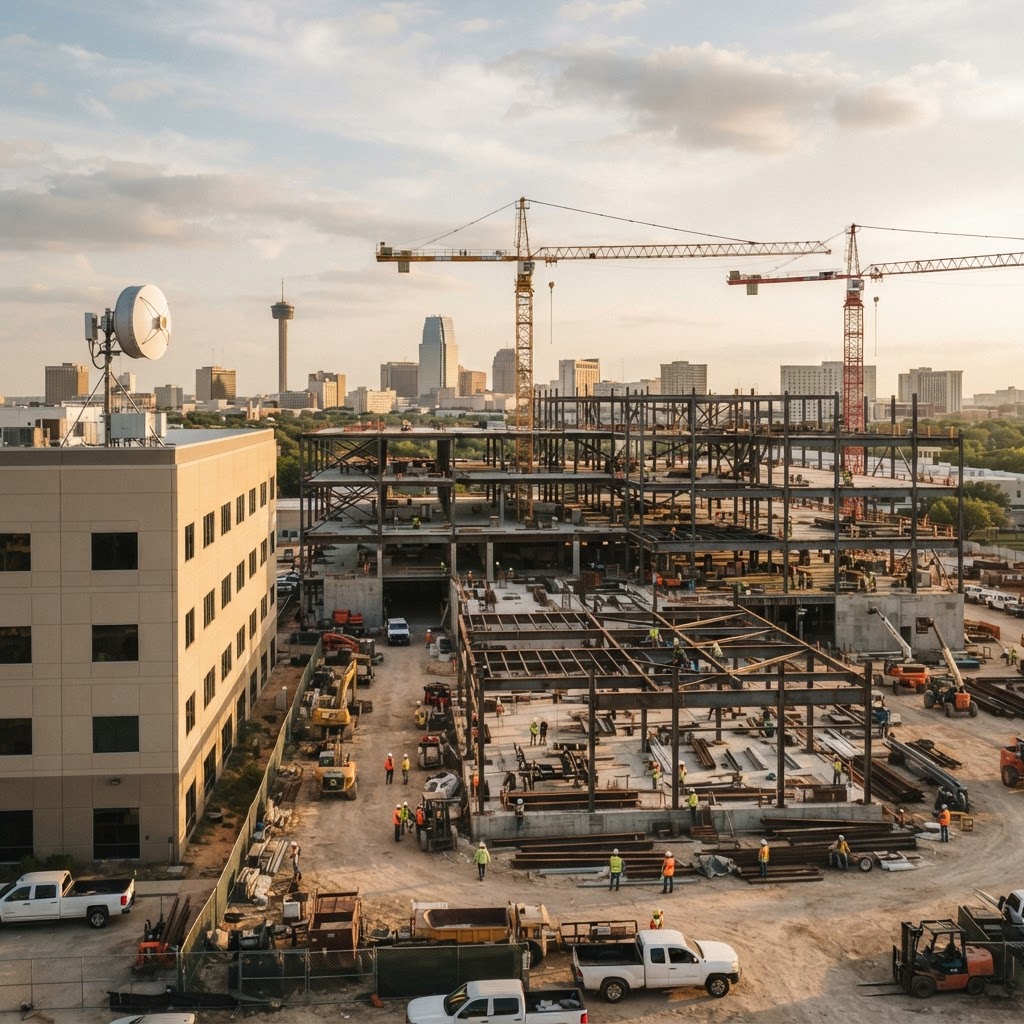
Step 6: Construction
Then the physical work begins. Depending on the project, construction may involve:
- Trenching
- Directional boring
- Installing conduit
- Setting handholes
- Installing innerduct
- Pulling fiber
- Building entrances
- Aerial construction
- Pole attachments
- Road crossings
- Surface restoration
This is the portion people often imagine when they hear "fiber installation." But significant planning may have occurred before a construction crew ever arrives.
Step 7: Fiber Splicing and Testing
Installing the cable isn't the end of the project. Fiber may then need to be spliced, terminated, tested, documented and connected to carrier infrastructure. The carrier's network equipment and upstream capacity must also be ready.
Step 8: Service Activation
Finally, the circuit must be provisioned and activated. Depending on the service, this can involve carrier equipment, customer equipment, routing, IP configuration, testing, network handoff and coordination with customer IT personnel. Only then is the connection actually useful to the business.
Fiber available nearby does not necessarily mean fiber is already available inside your building.
What Can Delay a Business Fiber Project?
Construction Requirements
The farther fiber must be extended, the more infrastructure may be required.
Permitting
Projects involving public infrastructure may require approval before construction can begin.
Easements
A network route may need permission to cross property that does not belong to the customer.
Road Crossings
Getting fiber across a major road can require additional engineering and construction.
Railroad Crossings
Rail infrastructure can significantly complicate telecommunications routes.
Existing Utilities
Underground infrastructure may limit where new conduit can be installed.
Building Access
Construction may be complete outside while the telecommunications room or internal pathway is not ready.
Carrier Coordination
Multiple organizations may be involved in delivering a single circuit.
Material or Equipment Availability
Specialized equipment may be required.
Weather and Field Conditions
Outdoor construction can be affected by conditions at the site.
The Real Problem: Your Business Has a Deadline
The carrier may view the project as a network construction schedule. The customer views it differently.
"We open Monday."
"Employees arrive next month."
"The warehouse management system has to be operational."
"The security cameras have to work."
"The phones need connectivity."
"The customer expects us to be online."
That's why telecommunications should be considered early in a commercial construction or relocation project. Connectivity can become part of the project's critical path.
The business has an opening date. The network needs a contingency plan.
Don't Wait Until Two Weeks Before Opening
One of the best things a company can do is begin evaluating telecommunications infrastructure early. Ideally, connectivity planning should begin when a new facility is being evaluated, a lease is being negotiated, construction begins, a building is purchased, a relocation is approved, or an industrial expansion is planned.
Before committing to an opening date, determine: What connectivity exists at the building right now? Not what a sales database says might be available. What physically exists.
What If Fiber Won't Be Ready in Time?
This is where the conversation gets more interesting. If the required fiber construction can't meet the business deadline, there may be another way to reach the network. For appropriate locations, point-to-point wireless can potentially bridge the distance between existing network infrastructure and the customer facility. Instead of waiting for underground fiber construction across the entire route, high-capacity connectivity can potentially travel through the air.
Opening Before Your Fiber Is Ready?
Your network timeline may have another option. Give NetWest the address and required bandwidth. We'll evaluate whether wireless connectivity may provide another path.
Wireless Can Bridge the Fiber Construction Gap
A potential architecture looks like this:
Permanent Fiber — Under Construction
Alternate Wireless Path
Where feasible, wireless may provide an alternate path while permanent fiber construction continues.
The fiber remains part of the network. Wireless solves the difficult final portion. This can be especially useful when fiber is nearby but not at the building, construction is required, the opening date is approaching, a road or other obstacle separates the building from fiber, the facility is located in an industrial area, underground construction is difficult, or another nearby building already has connectivity.
Could Wireless Be Used Temporarily?
Yes, depending on the project. A company may ultimately want direct fiber to the building. But that doesn't necessarily mean the business has to remain offline while waiting for permanent construction. For appropriate locations, a wireless connection could potentially provide connectivity while the permanent fiber project continues. Then, after fiber is activated, the network architecture can change.
Temporary Today. Backup Tomorrow.
This is where a wireless deployment can become especially valuable. Consider this progression.
Today — Temporary Wireless
Tomorrow — Fiber + Backup
An interim wireless connection may later become part of a long-term redundant network architecture.
Instead of removing the wireless infrastructure, it may be retained as a physically diverse backup connection. The solution that helped the business open can become part of its long-term network redundancy strategy.
Why This Can Be Better Than a Temporary Cellular Connection
Cellular service can be a useful temporary option. For a small office, it may be all that's necessary. But larger operations may need significantly more. A distribution center, manufacturing plant, warehouse or enterprise office may depend on:
- Cloud applications
- VoIP
- Security cameras
- VPNs
- Inventory systems
- Shipping platforms
- Large file transfers
- Remote management
- Hundreds of connected devices
A professionally engineered point-to-point wireless connection can potentially provide another class of connectivity compared with ordinary cellular failover. The appropriate solution depends on the facility's requirements.
What About Starlink or Satellite?
Satellite connectivity can also be useful in certain situations, particularly where terrestrial options are limited. But every technology has strengths and limitations. NetWest does not begin with the assumption that every project needs the same product. The goal is to determine the most practical network architecture based on bandwidth, latency, reliability, location, infrastructure, timeline, budget and long-term requirements. Sometimes the answer is fiber. Sometimes wireless. Sometimes satellite or cellular may provide an interim solution. Sometimes the strongest architecture combines technologies.
Point-to-Point Wireless Isn't Ordinary Wi-Fi
Enterprise wireless should not be confused with the Wi-Fi network inside a building. NetWest uses professional point-to-point wireless radio systems designed to connect specific locations. For demanding applications, licensed microwave can provide coordinated spectrum for carrier-grade network transport. Depending on the design, point-to-point systems can provide high capacity, low latency, long-distance connectivity, dedicated transport, private network connectivity, enterprise internet, fiber extension and backup connectivity.
What Does NetWest Need to Evaluate a Location?
You don't need a completed engineering package to begin. Start with the address. Helpful information includes:
- Service address
- Building name
- Required bandwidth
- Desired activation date
- Existing internet provider
- Whether fiber has already been ordered
- Expected fiber completion date
- Rooftop access
- Building height if known
- Telecom room location
- Whether connection is temporary, permanent or backup
NetWest can begin evaluating available infrastructure and potential wireless paths.
San Antonio Construction Managers: Add Internet to the Critical Path
For general contractors, developers and project managers, telecommunications can easily become an overlooked dependency. The building may have power, HVAC, furniture, security, network cabling and computers. But without upstream connectivity, many systems still won't function as intended. For commercial projects, add telecommunications availability to the early project checklist. Ask:
- Which carriers physically serve the property?
- Is fiber already inside the building?
- Is new construction required?
- Who is responsible for the outside plant?
- Are permits required?
- Is the telecommunications room ready?
- Is inside cabling complete?
- What is the contingency plan if permanent service is delayed?
That final question matters. What is Plan B?
What is Plan B if your fiber isn't ready?
NetWest Can Be Plan B — And Sometimes Plan A
NetWest has been solving difficult connectivity problems since 1996. Our capabilities include enterprise internet, fiber, point-to-point wireless, licensed microwave, tower infrastructure, rooftop infrastructure, structured cabling, network engineering, outside infrastructure, enterprise backup and network troubleshooting.
Because we work across multiple technologies, we don't have to begin every project with "Wait for the fiber." We can ask: "Is there another path?"
For related infrastructure capabilities, explore our fiber, enterprise backup, infrastructure services, tower services, and structured cabling pages.
NetWest Is Live in San Antonio
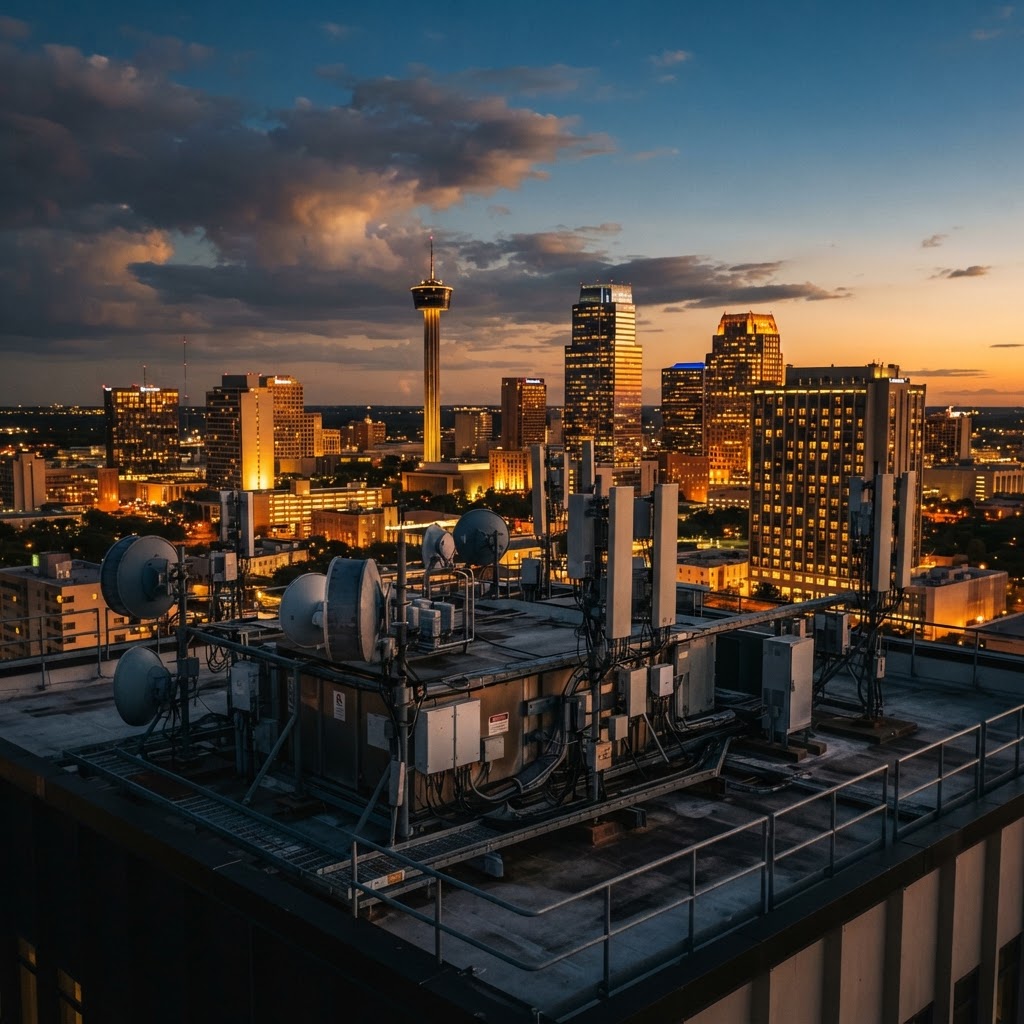
We've expanded our enterprise network capabilities into San Antonio with new high-capacity telecommunications infrastructure — combining carrier connectivity, rooftop infrastructure and high-capacity point-to-point wireless technology to deliver real enterprise network service.
Amazon Distribution Facility
High-capacity connectivity supporting a new distribution operation.
Toyota GFX Building
Enterprise connectivity supporting a major commercial facility.
"Taking connectivity from where it exists to where it needs to go."
The same philosophy NetWest has used for decades — now building in San Antonio.
Waiting on Fiber in San Antonio?
Don't automatically assume your business has to wait with it. Send NetWest the address. Tell us where the facility is, what bandwidth you need, when you need to be online, what the carrier has told you, and whether fiber construction has already started. We'll evaluate whether another path may be available.